
About Daffodil Day
| How long until Daffodil Day? | |||
|---|---|---|---|
| Daffodil Day . | |||
| Dates of Daffodil Day | |||
|
2027 Ireland
Friday, March 26th
2026 Ireland
Friday, March 20th
2025 Ireland
Friday, March 28th
2024 Ireland
Friday, March 22nd
2023 Mar 24, Mar 25
IrelandSat, Mar 25Observances Holiday
IrelandFri, Mar 24Observances Holiday
| |||
| Summary | |||
| Celebrate Daffodil Day and learn how this bright spring bloom became a powerful symbol of hope and a vital fundraiser in the fight against cancer. | |||
| Daffodil Day in other countries | |||
| Daffodil Day internationally | |||
Daffodil Day in Ireland
Daffodil Day is the Irish Cancer Society’s flagship fundraising day, held every year in Ireland since 1988.
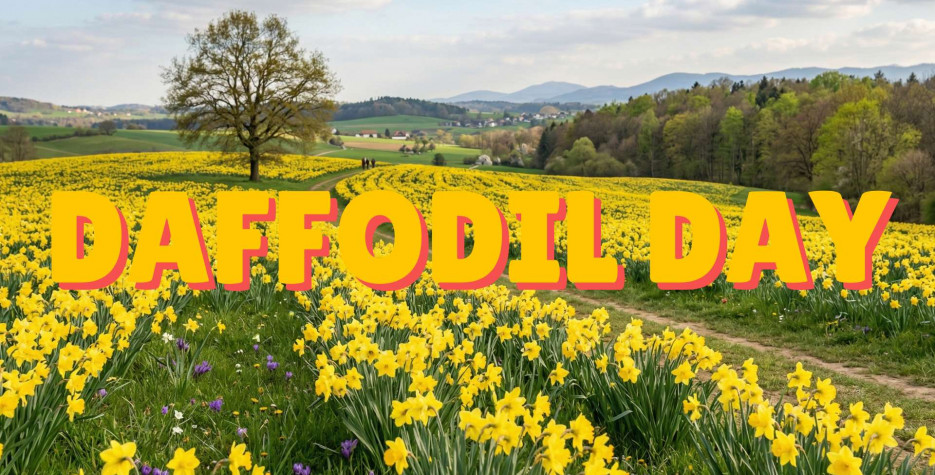
As winter fades and the first green shoots of spring emerge, few sights are as cheering as a field of bright yellow daffodils.
However, Daffodil Day is about much more than just admiring a pretty flower. It is a day of hope, a symbol of resilience, and one of the most significant fundraising events for cancer research and support services globally.
The History of Daffodil Day
While the specific date of Daffodil Day can vary depending on where you are in the world (often falling in March in the Northern Hemisphere and August in the Southern Hemisphere), the message remains the same.
The tradition began in Toronto, Canada, in the 1950s when volunteers organized "Daffodil Tea" events. However, it was the Canadian Cancer Society that officially launched the first Daffodil Day in 1957.
The movement quickly spread across the globe. Today, countries like Australia, New Zealand, Ireland, and the United States hold their own versions of the event.
The daffodil was chosen because it is the first flower of spring—a resilient bloom that survives the cold of winter to herald the return of life and warmth. This makes it the perfect emblem for those seeking a future free from cancer.
Did you know? In the Victorian "language of flowers," giving a single daffodil was said to be a sign of misfortune, but giving a bunch was a sign of joy and happiness.
Did you know? Daffodils contain a natural compound called galantamine, which is actually used in the treatment of Alzheimer’s disease.
How to Participate in Daffodil Day
Getting involved is easy, and every small action helps contribute to life-saving research and patient support. Whether you have a few dollars to spare or a few hours of time, here is how you can make a difference:
Wear a Pin: Purchase a daffodil pin from authorized volunteers or local businesses. It’s a simple way to show solidarity with those affected by cancer.
Buy Fresh Blooms: Many organizations sell bunches of fresh daffodils, with the proceeds going directly to cancer charities. They make a great gift for a friend or a bright addition to your own kitchen table.
Host a "Yellow" Event: Many people choose to host morning teas, bake sales, or "wear yellow" days at their workplace or school to raise funds.
Donate Online: If you can’t make it to a physical stall, most national cancer societies accept digital donations through their official websites.
Volunteer: Charities always need "street collectors" to help hand out pins and flowers on the day itself.
The Impact of Your Support
The funds raised on Daffodil Day go toward a variety of essential services. It isn't just about laboratory research; it's about the people living with a diagnosis today. The money typically supports:
Providing transport for patients to get to their chemotherapy appointments.
Funding 24/7 nursing hotlines for families in need of advice.
Investing in clinical trials to find more effective treatments.
Providing peer support groups and counseling for survivors.
By taking part in Daffodil Day, you are helping to ensure that no one has to go through their cancer journey alone. It’s a day to remember those we’ve lost, support those currently fighting, and look forward to a brighter, healthier future.
Other Observances on March 26th 2027
Good Friday ✝️
Read More